AI Headshots for Startup Founders Raising Capital
How professional headshots impact investor first impressions and fundraising success. Data-backed insights for founders preparing to pitch.
Portrait Pro Team
Image Studio
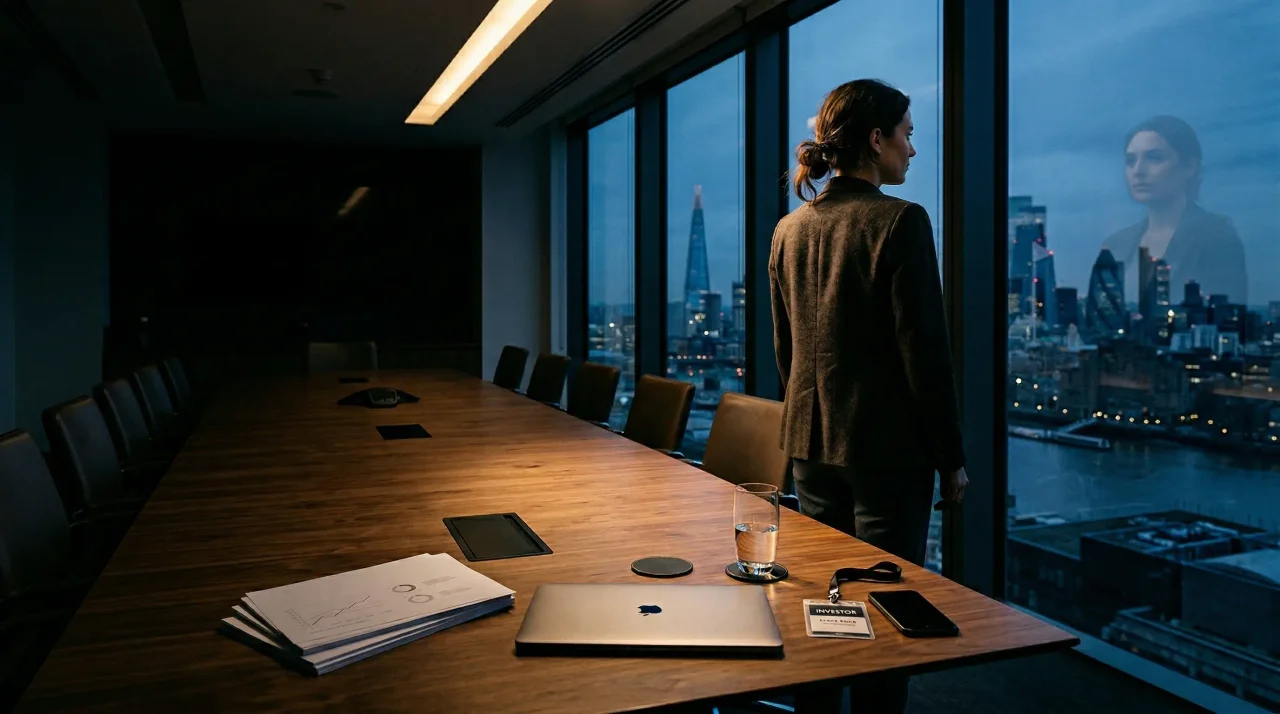
You have roughly 12 weeks and around 40 investor meetings to close a typical seed round.
That benchmark comes from DocSend research cited by TechCrunch: the median founder is running a sustained sequence of pitch decks, intro emails, LinkedIn outreach, and follow-up calls just to get a round over the line. In that environment, your photo is not a cosmetic detail. It is one of the first trust signals investors see on your LinkedIn, team slide, and founder bio pages.
New to AI headshots? Start with our complete guide to how AI headshots work, what they cost, and when to use them.
What most founders underestimate is how quickly those judgments form. Princeton researchers found that people make impressions of trustworthiness and competence from a face in as little as 100 milliseconds, and giving viewers more time mostly increases confidence in the original judgment rather than changing it.
That matters because investors do not spend long on first-pass materials. In the DocSend dataset TechCrunch summarized, investors spent an average of 3 minutes and 44 seconds on a pitch deck. You do not get the benefit of the doubt. You get a glance.
Quick answer: do AI headshots help founders raise money?
Yes—if they make you look like a credible, current, well-prepared version of yourself. For founder fundraising, the job of a headshot is not to look glamorous. It is to reduce friction on the team slide, LinkedIn profile, and intro email so investors read you as trustworthy before the meeting starts.
Why Your Face Is a Fundraising Asset
Let's look at where your photo actually shows up during the raise:
- Your LinkedIn profile, which investors check before responding to cold outreach
- The team slide in your pitch deck, viewed by 100% of investors (the only slide with that distinction)
- Your email signature, visible in every follow-up
- Your Crunchbase and AngelList profiles
- Speaker bios if you're doing podcasts or accelerator events
- Press coverage when you announce the round
Each of these touchpoints is a micro-conversion opportunity. A professional, credible image increases the probability that the investor takes the next step. An amateur photo creates friction, doubt, or worse, gets you filtered out before the conversation starts.
You do not need to overclaim the effect. The simpler point is enough: if investors are reviewing decks in minutes and forming facial impressions in milliseconds, a current, credible photo earns attention while a sloppy one wastes it. That is why the founder image belongs in the same category as your deck headline, metrics slide, and subject line—small asset, outsized use.
If your real concern is whether AI output feels too polished or uncanny for investor use, read why AI headshots look fake and how to avoid it. The right bar for fundraising is not “perfect.” It is “this clearly looks like me, on a sharp day, in a context that matches the company I’m building.”
The Psychology Behind the Image
Investors are human. They rely on the same cognitive shortcuts as everyone else. One of the most powerful is the halo effect: we see someone as competent in one dimension (appearance) and assume they're competent in others (leadership, execution, communication).
This cuts both ways. A polished, confident headshot primes the investor to expect a polished, confident pitch. It signals that you understand how the game is played, that you pay attention to detail, that you take your company seriously.
Conversely, a poorly lit selfie or an outdated photo raises subconscious questions: Is this founder serious? Would they represent my capital well? Can they build a team?
The visual cues investors scan in milliseconds include:
- Direct eye contact → honest, confident, trustworthy
- Soft smile or confident expression → approachable, emotionally intelligent
- Balanced lighting and framing → professionalism, attention to detail
- Consistent style across platforms → operational maturity, brand awareness
In remote-first fundraising, which is now the default, you don't get to shake hands or read the room. Your headshot is your first virtual handshake. It's your "I've got this" signal before you've said a word.
What the Data Says About Pitch Decks
The team slide is one of the few consistently non-negotiable slides in startup fundraising because early-stage investors are backing people before they are backing certainty. Markets move. Products change. Founders remain.
TechCrunch's summary of the DocSend research also noted that investors spent the most time on financials, team, and competition slides. That alone should change how most founders think about imagery: your headshot is not decorative filler on the team page. It is part of one of the most heavily scrutinized moments in the deck.
A professional headshot optimized for these constraints—readable at thumbnail size, believable on Zoom, and consistent across your deck, LinkedIn, and press bio—is a measurable edge.
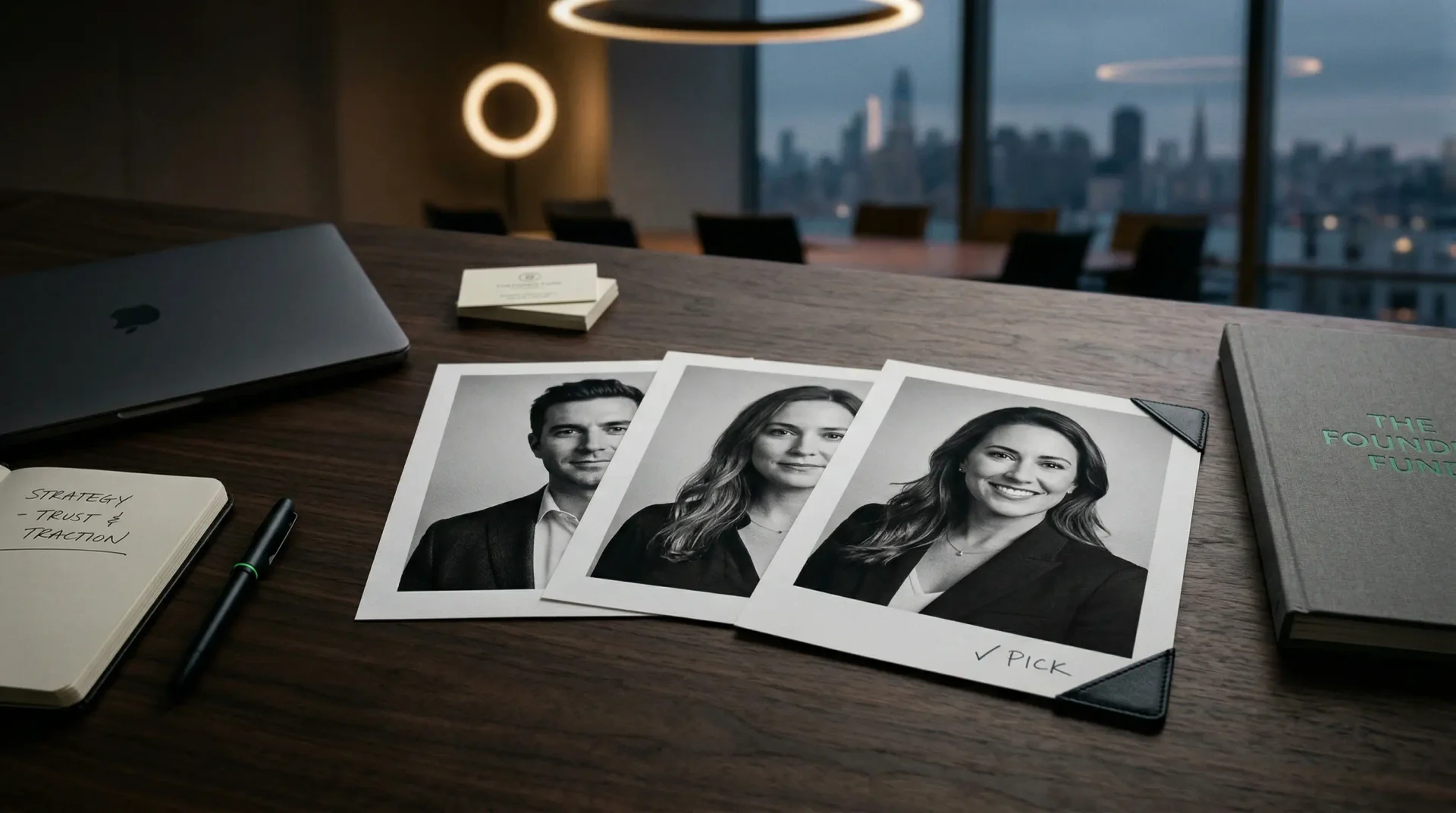
The Cost Reality: Traditional vs AI Headshots
Most founders don't have $500 and a free afternoon to book a studio session. They're burning runway, managing a team, building product, and juggling 47 other priorities. The logistics of traditional photography—scheduling, travel, hair and makeup, waiting weeks for edits—don't fit the startup timeline.
Here's how the costs break down in practice. For the broader pricing evidence, see our full AI headshots vs photographer cost comparison.
Traditional Studio Photography
- Cost: typically a few hundred dollars per person, with premium executive sessions rising much higher
- Deliverables: usually a small set of final retouched images
- Turnaround: often days to weeks once scheduling and editing are included
- Hidden costs: travel, hair and makeup, reshoots, usage rights, and founder-time overhead
For a founding team, the pain is not just the invoice. It is the coordination. Someone has to schedule the shoot, get everyone camera-ready, review selects, and then repeat the process whenever the team changes.
AI Headshot Generators
- Cost: typically tens of dollars per person
- Deliverables: dozens of options in multiple looks
- Turnaround: often same day
- Hidden costs: mainly selection time and the need to filter out uncanny outputs
That is why AI headshots increasingly make sense for fundraising operations. You can refresh a founder image before launch, before demo day, or before investor outreach without blocking half a day for a studio session.
What Makes a Great Founder Headshot
Not every professional photo works for fundraising. The goal isn't to look like a model. It's to look like a founder investors can trust with millions of dollars.
The Essentials
Framing: Head and shoulders, with clear eye contact and visible facial features. This creates intimacy and connection without the formality of a full-body shot.
Lighting: Balanced across both sides of your face. Avoid harsh shadows or overexposed backgrounds. Good lighting reads as "competent" at a subconscious level.
Expression: Confident and approachable. The "confident half-smile" strikes the right balance—warm enough to be relatable, serious enough to signal you mean business. Avoid overly casual grins or stiff, stern expressions.
Background: Simple and non-distracting. Neutral tones, soft office environments, or subtle gradients work best. The background should frame you, not compete with you.
Attire: Match your startup's tone. Fintech founder? Button-down or blazer. Dev tools? Smart casual. Consumer app? Clean, modern, approachable. When in doubt, slightly more formal is safer than too casual.
Consistency Across the Team
One of the most powerful credibility signals is a cohesive team page where all founders have matching style, lighting, and background treatment. It suggests you're organized, aligned, and operationally mature.
Mixed styles—one founder with a studio shot, another with a blurry selfie, a third with a logo placeholder—read as disorganized. The inconsistency becomes a distraction from your story.
AI headshots make team consistency easy. Everyone uploads selfies, selects the same style parameters, and receives matching professional portraits within hours.
What Actually Changes When Founders Upgrade the Photo
The strongest claim we can make here is operational, not magical. A better founder headshot does three things:
- It makes the team slide faster to parse. Faces plus concise credentials beat a wall of names.
- It creates consistency across investor touchpoints. LinkedIn, deck, email signature, press, and accelerator bios all reinforce the same impression.
- It reduces credibility drag. Investors stop noticing the image as a liability and move on to the actual company.
This is also why team consistency matters. If one founder has a polished portrait, one has a dim laptop-camera screenshot, and one has no photo at all, the visual mismatch reads as organizational immaturity. If the whole team looks coherent, the company looks more coherent.
If you are building a leadership page or investor-facing team slide, pair this post with executive headshots that command the room for the higher-stakes art-direction details.
Where to Use Your AI Headshots
Once you have your professional images, deploy them consistently:
1. Pitch Deck Team Slide
Place your headshot next to your one-line bio (e.g., "Sarah Chen — CEO | Ex-Google, Stanford CS"). Use circular frames for a modern look or square frames for a more formal brand. Ensure all co-founders use the same dimensions and treatment.
2. LinkedIn Profile
This is your primary discovery surface. Investors will check your LinkedIn before responding to cold emails. A professional photo here is table stakes. LinkedIn data shows profiles with professional photos get 14–21x more views.
3. Email Signature
A small headshot in your email signature humanizes every follow-up. It creates continuity between your written communication and your eventual Zoom call. Keep it small (under 100KB) and professionally cropped.
4. Company Website / About Page
Your headshot anchors your founder story. It tells visitors who's behind the product and why they should believe in it. Use a consistent style across the entire team page.
5. Crunchbase and AngelList
These profiles rank highly in Google search results for your name. Ensure they have the same professional image as your other properties.
6. Accelerator Applications
Y Combinator, Techstars, and other accelerators require founder headshots for internal documents, public listings, and demo day materials. Having these ready in advance shows preparation.
7. Press and PR
When you announce your round or get featured in publications, journalists need a headshot for the article. A high-quality, professional image increases the probability of being included and looking credible when you are.
Choosing an AI Headshot Service
Not all AI generators are equal. For founder headshots specifically, look for:
Quality: Review sample outputs before committing. The best services produce photorealistic images with natural skin tones, accurate lighting, and minimal artifacts. Avoid services with a "soulless" or overly airbrushed look.
Variety: You want options. Look for services that generate 40+ images with multiple backgrounds, outfits, and expressions so you can select the best fit for your brand.
Speed: Same-day delivery is standard. Some services deliver in under an hour.
Commercial Rights: Ensure the service grants full commercial usage rights for your photos. You need to use these in pitch decks, websites, and press materials without restriction.
Privacy: Check that the service deletes your uploads within 30 days and doesn't use your photos to train their models unless you opt in.
Pricing: Most quality services fall in the $29–$79 range for individual packages. Team discounts often apply at 5+ people.
Addressing the Authenticity Concern
Some founders worry that AI-generated headshots feel "fake" or might create a mismatch when investors meet them on Zoom. This is a valid concern, but it's manageable with the right approach.
The key is authenticity through selection, not generation. Upload 8–12 clear selfies that actually look like you. Select output styles that preserve your natural features—your face shape, hair texture, skin tone. Choose final images that look like you on your best day, not like a different person entirely.
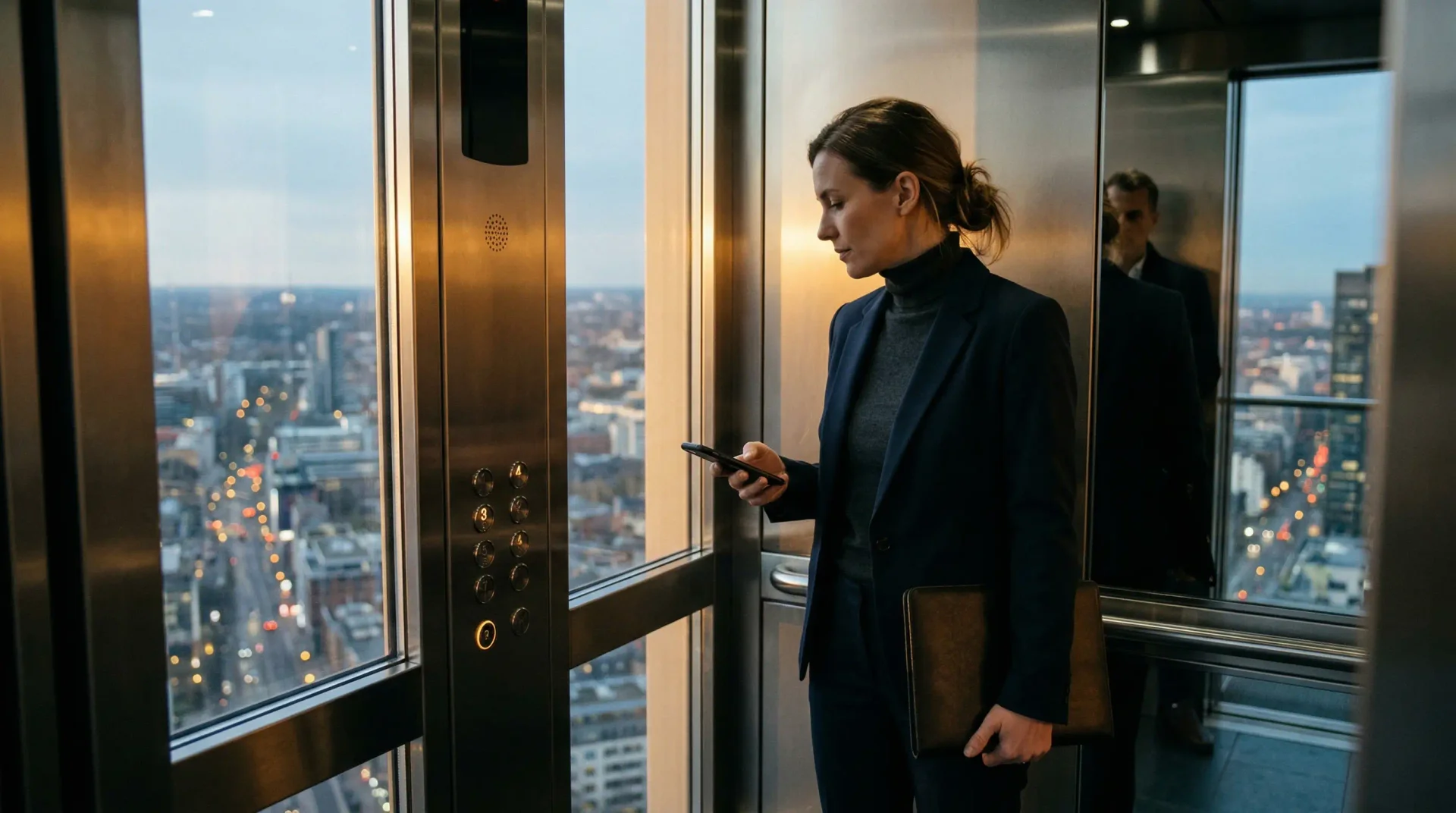
When done well, AI headshots enhance rather than fabricate. They show you with professional lighting, confident posture, and appropriate styling—things that would be true if you'd spent $500 on a studio session.
The occasional "uncanny valley" failures (extra fingers, weird backgrounds, distorted features) are easily filtered out when you receive 50+ options. Pick the 3–5 that look most natural and professionally polish those.
The Bottom Line
Fundraising is a conversion funnel. At each stage—cold email, deck review, first call, partner meeting—investors are deciding whether to keep going. Your headshot sits at the top of that funnel.
A credible founder image will not rescue a weak company. But it can remove needless doubt, help the team slide do its job, and make your outreach materials feel sharper and more current.
For most founders, that makes AI headshots a rational default: fast, cheap, and good enough for LinkedIn, investor decks, and founder bios. The caveat is likeness. If the image looks too perfect, too generic, or not enough like you, it stops helping.
So use the simple standard: choose the photo that makes an investor think, almost instantly, “this founder looks prepared.” In a process where first impressions form in 100 milliseconds and decks get a few minutes at most, that is not vanity. It is use.
Sources: Princeton on 100-millisecond first impressions, TechCrunch summary of the DocSend fundraising study, and our own AI headshots vs photographer cost comparison.
Ready to upgrade your founder image? Generate professional AI headshots in minutes and start converting more investor conversations into term sheets.
Related Articles
LinkedIn Headshot AI Guide for 2026
A practical guide to LinkedIn headshot AI: likeness, lighting, trust signals, usage rights, and whether the final image earns the meeting.
AI Headshots: What They Cost, How They Work, and When to Use Them
AI headshots are professional portraits generated by AI from your selfies. They cost $25-75 vs $475-1950+ for a photographer. Here's how they work and when to use them.
AI Headshots vs Photographer: The Real Cost Comparison for 2026
Compare AI headshots vs photographers on cost, quality, and time in 2026. See the real pricing math and when each option makes sense.
Ready to create images that convert?
Generate headshots, thumbnails, and covers that stay on brand—no photo shoots or design rounds.
Launch Image Studio